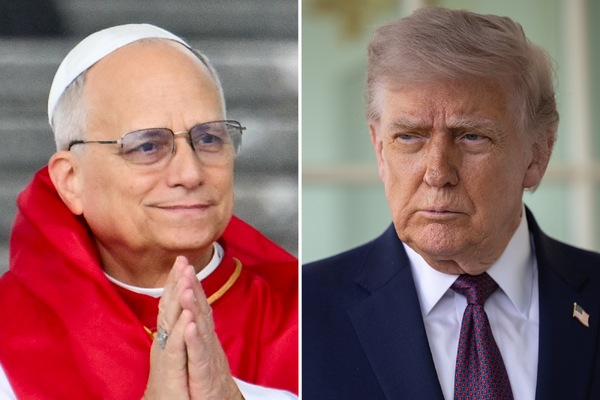
The Midterms Underscore a Divide Between Christianity and the Christian Right

The Christian right's election setbacks have brought renewed attention to a distinction often blurred in political coverage: conservative Christian organizations do not represent every Christian voter. The New York Times’ account of the 2026 midterms describes losses for that movement alongside gains by candidates and organizers who offered a different religious understanding of public responsibility.
According to the Times, an analysis from Evangelicals for a Better Future found a larger Democratic shift between 2024 and 2026 in counties with higher Christian population shares. Many of the counties showing the biggest changes had large Latino populations. That county-wide finding should not be read as a measurement of Black Christians, Latino Christians or any other individual group switching parties.
Political Influence Does Not Speak For Every Believer
For years, conservative Christian organizations treated their relationship with President Donald Trump as a route to public policy, especially restrictions on abortion. The alliance also tied their political fortunes to his broader agenda. After the midterms, some leaders described an administration that had offered recognition and access without delivering enough of the changes they wanted.
The administration did establish a White House Faith Office and a task force on anti-Christian bias. Those actions, however, did not satisfy activists interviewed by the Times. Terry Schilling of American Principles Project faulted the movement's limited legislative gains and the administration's focus on war with Iran. His criticism reflected frustration within the conservative coalition, rather than a rejection of its longstanding social priorities.
Senator Josh Hawley offered a different emphasis: housing, health care, marriage and the cost of raising children. In the Times interviews, he presented those concerns as part of a Christian approach to public life. Anti-abortion organizer Kristan Hawkins also pointed to the gap between promises of economic opportunity and the pressures facing young families. Whether that emphasis produces different legislation remains unresolved.
Religious Differences Run Through The Electorate
The election did not produce a uniform rejection of conservative social policy. According to the reported ballot-measure results, four states backed restrictions on transgender athletes in female sports, and Idaho rejected an abortion-rights measure. Virginia and Nevada approved constitutional protections for abortion rights. Those outcomes complicate any claim that one national result settled every dispute.
Polling also shows why Christian voters cannot be treated as one bloc. Pew’s October survey put approval of Trump among white evangelical Protestants at 58%, down from 78% in early 2025. PRRI’s separate pre-election research likewise documented substantial differences among religious groups. These surveys describe attitudes before the election; they do not identify the reasons behind every ballot cast.
The constitutional framework remains broader than either party's coalition. The First Amendment protects religious exercise. Christians, Muslims, Jews, people of other faiths and people without a religious affiliation all participate in the same political system. Election victories can change control of public offices without giving any coalition exclusive authority to define the country's religious identity.
The next stage will also separate campaign reactions from decisions in office. An organizer's proposed priority is not an enacted program, and a newly elected lawmaker has yet to establish a record in that role. Following the debate therefore requires attention to legislation, implementation and budgets, as well as the explanations offered by those who won or lost.
Christian Voters Have Different Political Experiences
The distinction matters when a political movement's setbacks are described as a verdict on Christianity itself. Churches and believers disagree about abortion, immigration, the role of government, economic policy and the relationship between religion and national identity. Some of those disagreements occur within denominations and congregations, as well as between them.
The Times described religious progressives who organized around immigration enforcement and cuts to social programs. Their argument placed the treatment of vulnerable people at the center of a moral evaluation of government. Conservative leaders, meanwhile, are debating how to bring affordability into their own account of family policy. Similar religious vocabulary can therefore lead to sharply different policy proposals.
The difference is visible in survey evidence, too. Pew’s religious-group breakdown illustrates that a finding about white evangelicals cannot be generalized to all Christians. An overall religious label can conceal differences in race, denomination, region, age and political experience. It can also obscure disagreement among people who share the same demographic category.
The Times reported that the next Congress will include nine Democratic Christian pastors and seminarians, alongside eight Muslim Democrats. Those descriptions concern the religious backgrounds of particular elected officials. They do not mean that any legislator speaks for all members of a faith or that religious credentials establish the merits of a policy.
Episcopal Bishop Mariann Budde expressed cautious optimism about people of different faiths working together, while acknowledging that substantial work remains. Her response contrasted with conservative leaders who interpreted the losses chiefly as a failure to mobilize their voters.
Taken together, these developments describe a contest over representation and priorities within a religiously diverse public. The Christian right remains a political force, but its fortunes cannot stand in for the fortunes, convictions or civic participation of Christianity as a whole.
Photograph supplied by the publisher; date and location not specified.